If you are looking for the best dishwasher for hard water, the wrong model can leave you with white marks on glasses, dull cutlery and more cleaning work than expected. Hard water needs a dishwasher that can manage limescale well, rinse properly and stay reliable over time.
What matters most in the best dishwasher for hard water
The main issue is not just how well a dishwasher cleans on day one. It is how well it keeps cleaning after months of mineral build-up. In hard water areas, limescale can affect spray arms, heating elements and internal pipework. That means weaker cleaning, poorer drying and a shorter lifespan if the machine is not built to cope.
A good choice usually has three things. First, an effective water softening system or strong support for dishwasher salt. Second, wash programmes that rinse thoroughly and use water efficiently. Third, easy maintenance, because even a good machine needs regular descaling in hard water areas.
You do not always need the most expensive model. But very cheap machines can be a false economy if they struggle with residue or need more repairs.
Built-in water softener or salt support?
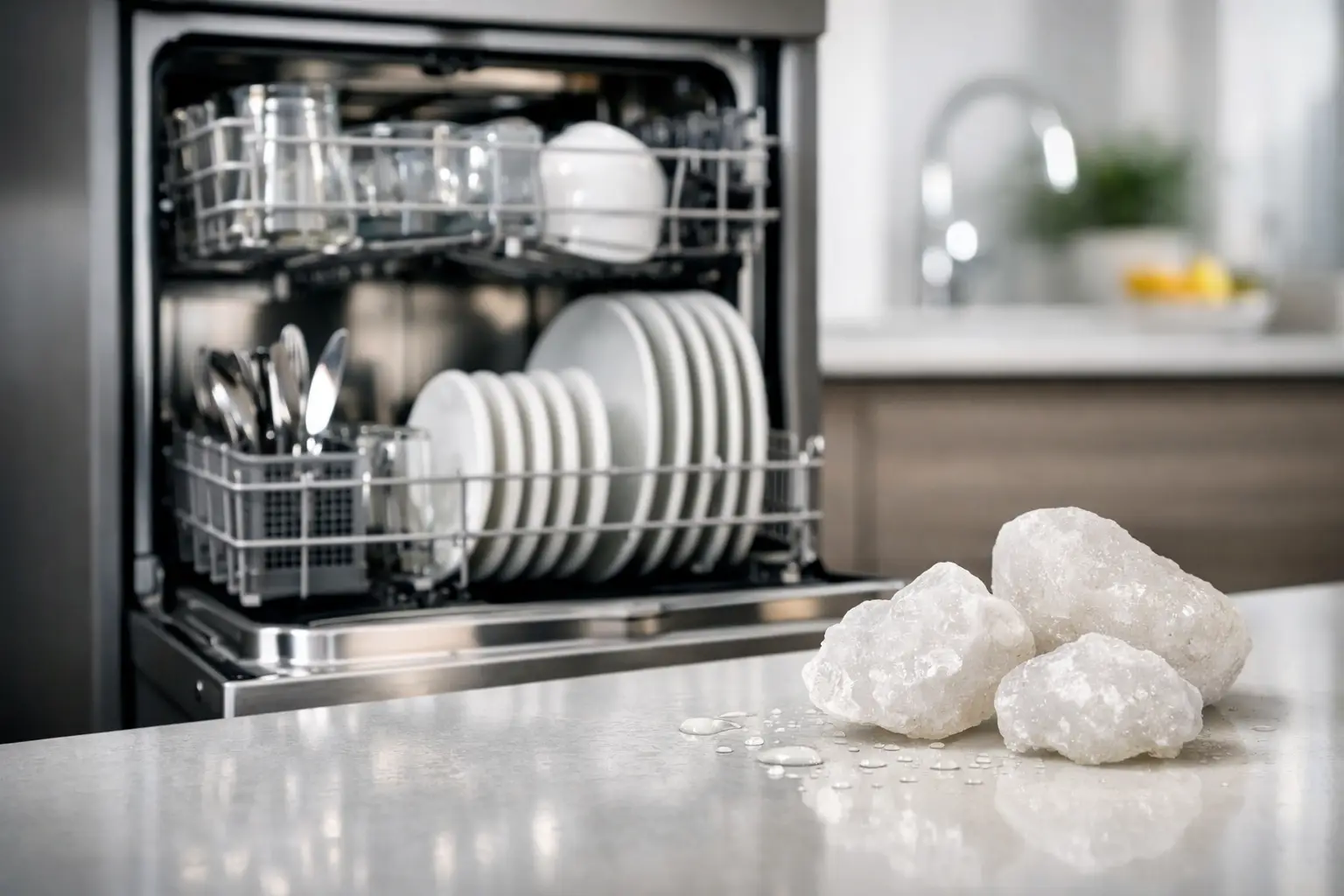
For most UK buyers, this is the first thing to check. Many full-size and slimline dishwashers support dishwasher salt through an internal softening unit. This helps reduce mineral deposits before the wash water is sprayed onto dishes. In hard water areas, that matters more than extra smart features.
Some buyers assume rinse aid alone is enough. It is not. Rinse aid helps water sheet off glasses and plates, which improves drying and reduces spotting. But it does not soften hard water in the same way. If you live in a hard water postcode, a dishwasher with adjustable water hardness settings and proper salt support is the safer option.
If a model does not make these settings clear, that is a warning sign. Good machines usually let you match the dishwasher to your local water hardness level. That gives better results and helps avoid overusing salt.
Cleaning performance in hard water
Cleaning performance is where hard water problems show up fast. A dishwasher may look strong on paper but still leave film on glassware if rinsing is weak. This is why programme quality matters as much as raw power.
Look for models with intensive cycles, auto programmes and higher-temperature options. Heavy or intensive programmes can help break down grease and mineral residue together. Auto cycles are useful too, especially if the machine can adjust water use and temperature based on how dirty the load is.
Glass care settings can also help if cloudy glasses are a regular issue. They will not fix poor water management on their own, but they can reduce wear on delicate items.
Do not focus only on the number of programmes. Six useful programmes are better than twelve average ones. What matters is whether the machine offers a proper eco wash, a reliable daily cycle and a stronger setting for stubborn loads.
Drying matters more than many buyers expect
Hard water does not just affect washing. It affects drying too. Water droplets left on dishes can dry into visible spots, especially on black plates, glass and stainless steel. So a dishwasher that dries well can save you from rewashing or hand polishing items.
Look for models with fan-assisted drying, auto-door opening at the end of the cycle or well-rated condensation drying. Auto-door opening can be especially useful because it releases steam and helps dishes dry more fully before minerals settle on the surface.
Plastic containers are still the weak point in most dishwashers. If you wash a lot of plastics, do not expect perfect drying from every model. In that case, prioritise stronger drying systems over extra rack features.
Energy efficiency and running costs
Running costs matter, but they need context. An efficient dishwasher can still be the wrong choice if it struggles in hard water and needs extra cycles or repeat washes. The best option is usually a model that balances low water and energy use with dependable cleaning.
Eco programmes often use less heat and more time. That is fine in many homes, but in very hard water areas, some users find that stronger regular cycles give better everyday results. It depends on your water hardness, detergent and load type.
If you run the dishwasher often, check annual energy use, water use per cycle and whether the machine has a half-load or auto mode. But do not choose on efficiency ratings alone. Consistent results are worth more than small savings if poor performance creates more work.
Full-size, slimline or compact?
Size affects value. A full-size dishwasher is often the best buy for families because it usually offers better internal space, stronger cleaning and better salt management than very small units. It also tends to give a lower cost per wash when fully loaded.
Slimline models can still work very well in hard water. They are a good choice for smaller kitchens, couples or flats where space is tight. The key is not to assume all slimline machines are weaker. Some offer very similar water softening and programme options to full-size versions.
Compact countertop models are the most mixed category. They can suit very small households, but hard water performance is often less impressive. Capacity is lower, drying can be weaker and water softening features are not always as strong. If your water is very hard, a compact model needs more careful checking before you buy.
Build quality and long-term reliability
Hard water is tough on appliances. That makes build quality more important than usual. Stainless steel interiors are generally preferable to plastic tubs for durability and heat handling, though a well-made plastic-based model can still be fine at the right price.
Look closely at user feedback on limescale build-up, blocked spray arms, poor draining and declining performance after the first year. In this category, long-term owner reviews can be more useful than first impressions.
A removable filter system is worth having because regular cleaning is simple and helps maintain wash quality. Easy access to spray arms and clear descaling guidance are also positives. If a dishwasher is awkward to maintain, it is less likely to stay at its best in a hard water home.
Features worth paying for and features you can ignore
Some extras genuinely help. Adjustable upper racks are useful if you wash tall glasses, pans or awkward items. A cutlery drawer can improve space and cleaning, though some people still prefer a basket for convenience. Delay timers, leak protection and a clear time display are also practical.
Wi-Fi control is less important for most buyers. It may sound useful, but it rarely improves cleaning results. The same applies to large numbers of specialist programmes you may never use.
If you are trying to choose faster, focus your budget on four areas: water softening support, cleaning quality, drying performance and reliability. Everything else comes after that.
How to compare models quickly
When comparing options, start with the product specification, then narrow it down with user reviews. Check whether the dishwasher supports salt, has adjustable hardness settings and offers an intensive cycle. Then look at comments on glass spotting, drying and reliability after several months of use.
It also helps to compare noise level if your kitchen and living area are open plan. Quiet running is useful, but not at the expense of wash quality. A slightly louder machine that cleans and dries properly is often the better buy.
For many UK shoppers, the quickest route is to shortlist three models in the right size and price bracket, then compare them on hard water features first. That gives a better result than sorting by star rating alone.
Common mistakes when buying the best dishwasher for hard water
One common mistake is choosing based on price only. A cheaper model may cost less upfront but more over time if it struggles with limescale or leaves residue behind. Another is assuming all dishwashers handle hard water equally well. They do not.
Buyers also sometimes overlook setup. Even a good machine can perform badly if the water hardness setting is wrong or dishwasher salt is not used when needed. If your local water is hard, setup is part of performance.
The last mistake is ignoring maintenance. No dishwasher is maintenance-free in a hard water area. Filters need cleaning. Salt and rinse aid need topping up. Occasional descaling helps preserve cleaning and drying quality.
Which type of dishwasher is best for hard water?
For most households, the best dishwasher for hard water is a full-size or slimline model with an internal water softening system, adjustable hardness settings and strong drying performance. That combination usually gives the best balance of price, results and long-term reliability.
If you have a larger household or wash daily, a full-size machine is often the strongest choice. If space is limited, a slimline dishwasher with salt support is usually better than a compact model without it. If your budget is tight, cut back on smart extras first, not on hard water essentials.
A faster buying decision usually comes down to this. Choose the right size. Check for salt support and hardness settings. Make sure drying is strong. Then compare reliability and owner feedback. That will get you closer to the right model than chasing the longest feature list.
A dishwasher should save time, not add extra polishing and maintenance. In a hard water area, the best choice is the one that stays effective after the first few months, not just the one that looks good in the product listing.