If you are comparing a foam vs spring mattress, the quickest answer is this: foam usually suits people who want pressure relief and less motion transfer, while spring often suits those who want a firmer, cooler and more responsive feel. The right choice depends on how you sleep, your body weight, your budget and how warm you get at night.
This is one of the biggest mattress buying decisions. It affects comfort, support, durability and value for money. A mattress can feel good for five minutes in a shop and still be wrong after a full night in bed. That is why it helps to compare the two types properly before you buy.
See Our Top 10 Picks
Here are the 10 best models we tested and ranked to help you choose faster.
View Best ProductsFoam vs spring mattress: the main difference
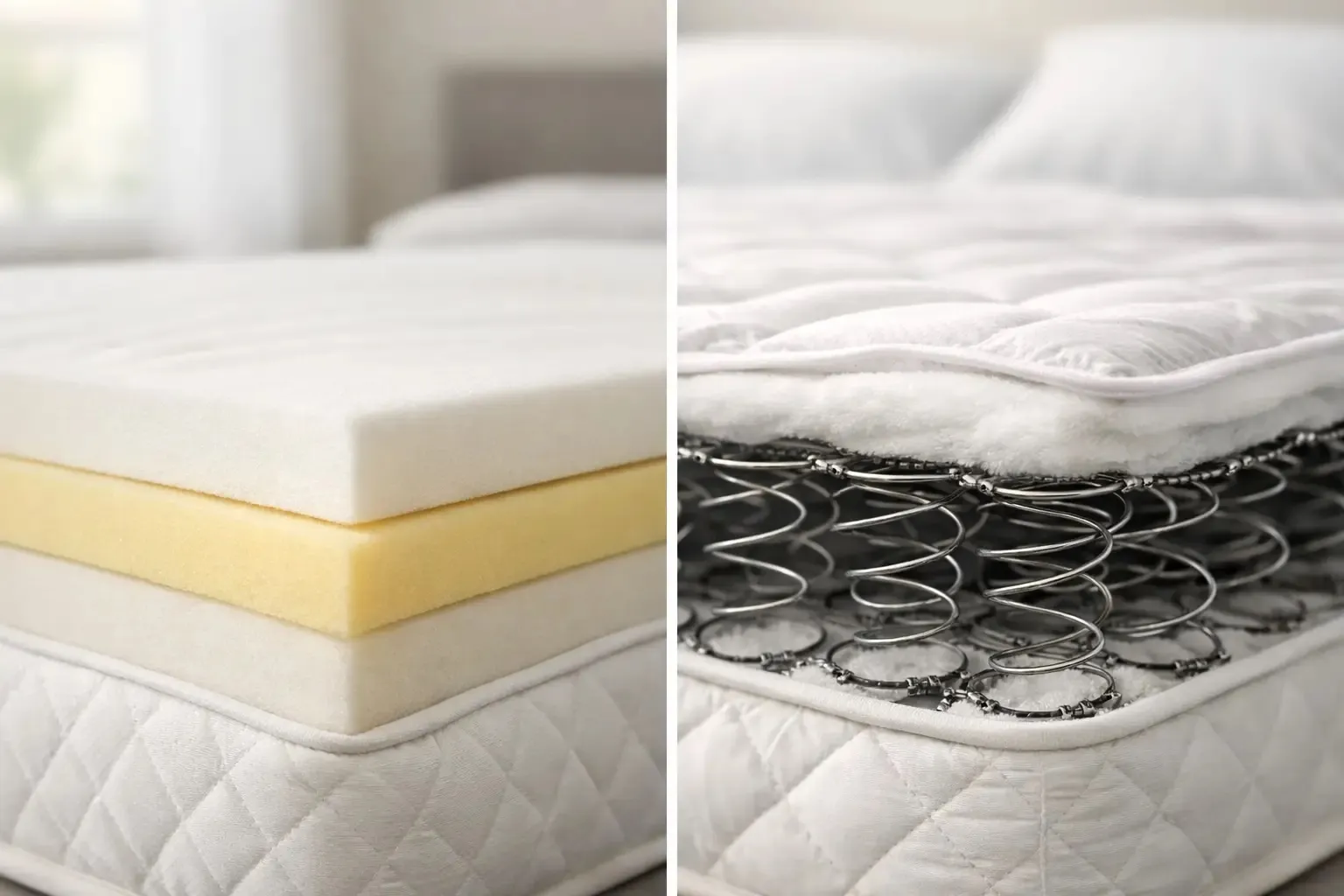
A foam mattress uses comfort layers made from memory foam, polyurethane foam or a mix of foams. It moulds more closely to the body. That usually means a more cushioned feel and better pressure relief around the shoulders, hips and knees.
A spring mattress uses metal coils as the main support system. It may also include a comfort layer on top, but the core support comes from the springs. This usually gives a more lifted feel, more bounce and better airflow.
Neither type is always better. Each works well for different sleepers.
Choose foam if you want pressure relief
Foam is often the better choice if comfort around pressure points matters most. Side sleepers usually benefit here because more of the body presses into the mattress. Good foam spreads that weight more evenly, which can reduce aches around the hips and shoulders.
Memory foam is also useful if you share a bed. It absorbs movement better than most spring mattresses. If one person turns over or gets up in the night, the other is less likely to feel it.
The trade-off is feel. Some people like the body-hugging effect. Others find it too soft, too slow to respond or harder to move around on. If you change position often, a deep memory foam feel can seem restrictive.
Foam can also sleep warmer. Not every foam mattress traps heat, but many cheaper all-foam models do hold more warmth than spring designs. If you often wake up hot, this matters.
Choose spring if you want bounce and airflow
A spring mattress tends to feel more supportive on the surface rather than contouring around you. Many people describe it as easier to move on, easier to get in and out of, and generally fresher through the night.
That makes spring a strong option for back sleepers, combination sleepers and hot sleepers. The open coil structure allows more airflow, especially compared with dense foam. If you prefer a mattress that feels more stable and less sinking, spring often gets closer to that feel.
Spring mattresses also cover a wide price range. There are budget-friendly options, but quality varies a lot. Lower-end spring models can feel uneven or lose comfort faster, especially if the top layer is thin.
Motion transfer is the main weakness. Basic open coil mattresses can pass movement across the bed more easily. Pocket sprung models improve this because the springs work more independently, but they still do not usually isolate motion as well as foam.
Which is better for your sleeping position?
Sleeping position is one of the easiest ways to narrow down the choice.
Side sleepers
Foam is often the safer option. It cushions pressure points better and can help keep the spine more aligned if your shoulders and hips need to sink in slightly. A spring mattress can still work, but usually only if it has enough comfort padding on top.
Back sleepers
Both can work well. The key is balanced support. You want the lower back supported without the hips dropping too far. Medium to medium-firm mattresses are often the best fit. Foam can provide great contouring, while spring can give a flatter, firmer feel.
Front sleepers
Spring is often the better choice, especially for average to heavier body weights. Front sleepers usually need a firmer surface to stop the midsection sinking too deeply. Soft foam can put the lower back under strain.
Combination sleepers
If you move around a lot, spring often feels easier. It has more bounce and less of the slow-response feel that memory foam is known for. Some hybrid mattresses solve this by combining springs with foam layers.
Which is better for body weight?
Body weight changes how a mattress feels. A lighter person may find medium foam supportive enough, while a heavier person may sink further into the same mattress and need a firmer build.
Lighter sleepers often get on well with foam because it offers comfort without needing a lot of body weight to activate the contouring. With spring mattresses, very firm models can feel too hard if you are light.
Average-weight sleepers have the widest choice. Either type can work depending on sleeping position and personal preference.
Heavier sleepers often do better with firmer spring or hybrid mattresses, especially those with strong support cores. Very soft foam can lose shape faster under more weight and may not keep the spine aligned. Dense, high-quality foam can still work, but build quality becomes more important.
Heat, motion and edge support
These are three common deal-breakers when choosing between mattress types.
If you sleep hot, spring has the edge. Better airflow is the main reason. Foam can be improved with gel layers, open-cell designs or breathable covers, but all-foam still tends to retain more heat than spring.
If you share a bed and one of you is a restless sleeper, foam usually wins. It absorbs movement better and helps reduce disturbances.
If you sit on the edge of the bed often or need stronger support when getting in and out, spring is often better. Foam mattresses can compress more at the edges unless they are specifically reinforced.
Foam vs spring mattress on price and value
Price alone does not tell you which type is better value. Construction quality matters more than the label.
Cheap foam mattresses can feel comfortable at first but may soften too quickly if the foam density is low. Cheap spring mattresses can lack proper support or develop pressure points if the comfort layer is thin.
In the mid-range, both can offer good value. This is where many shoppers find the best balance of comfort, support and lifespan. If you are comparing options, look beyond brand claims and check firmness, materials, trial period and warranty.
At the premium end, the market often shifts towards hybrids rather than pure foam or pure spring. These can combine pressure relief with support and airflow, but they also cost more.
Durability: which lasts longer?
There is no simple winner. A well-made foam mattress can outlast a poor spring mattress, and the reverse is also true.
Foam durability depends heavily on density and material quality. Lower-density foam is more likely to sag, soften or form dips over time.
Spring durability depends on coil quality, coil count, construction and the comfort layers above the springs. Pocket sprung mattresses are usually the better long-term choice than basic open coil models.
For most UK shoppers, the safer buying rule is this: avoid the cheapest end of either type if you want a mattress to stay comfortable for years.
When a hybrid mattress may be the better option
If you are stuck between the two, a hybrid can make more sense than forcing a pure foam or spring choice. Hybrids usually combine a pocket sprung base with foam comfort layers.
That gives you some of the contouring and motion control of foam, with more airflow and bounce from springs. For many people, this is the most balanced setup.
The downside is price. Hybrids are often more expensive than entry-level foam or spring models. They also vary a lot in build quality, so it is worth comparing thickness, materials and firmness carefully.
Quick buying advice before you choose
When comparing mattresses, do not focus only on whether it is foam or spring. Also check firmness, depth, edge support, trial period and whether the brand explains who the mattress is best for.
If you sleep on your side, foam or hybrid is usually the easier choice. If you sleep hot or prefer a firmer, more lifted feel, spring or hybrid is often better. If your partner moves a lot, foam has a clear advantage. If your budget is tight, compare build quality closely because cheap versions of both types can disappoint.
At Best Product Compare, this is where comparison pages help most. Once you know whether you lean towards foam, spring or hybrid, it becomes much easier to narrow down the best options for your budget and sleep style.
Final verdict on foam vs spring mattress
A foam mattress is usually the better choice for pressure relief, side sleeping and couples who want less motion transfer. A spring mattress is usually the better choice for airflow, responsiveness and sleepers who prefer a firmer, less sinking feel.
If you are still undecided, start with the problem you want to solve. Choose foam if comfort and movement isolation matter most. Choose spring if heat and bounce matter most. That will get you to the right shortlist much faster.