Standing in front of dozens of models, the real question is simple: what blender do I need for the way I actually cook? The right answer depends less on brand names and more on what you want to blend, how often you will use it, and how much space you have in your kitchen.
A lot of shoppers buy too much blender or not enough. A powerful jug blender sounds good until it takes over the worktop and only gets used twice a month. At the other end, a cheap personal blender can struggle if you want to crush ice, make nut butter or blend hot soup. The quickest way to choose well is to match the blender type to your everyday jobs.
See Our Top 10 Picks
Here are the 10 best models we tested and ranked to help you choose faster.
View Best ProductsWhat blender do I need for everyday use?
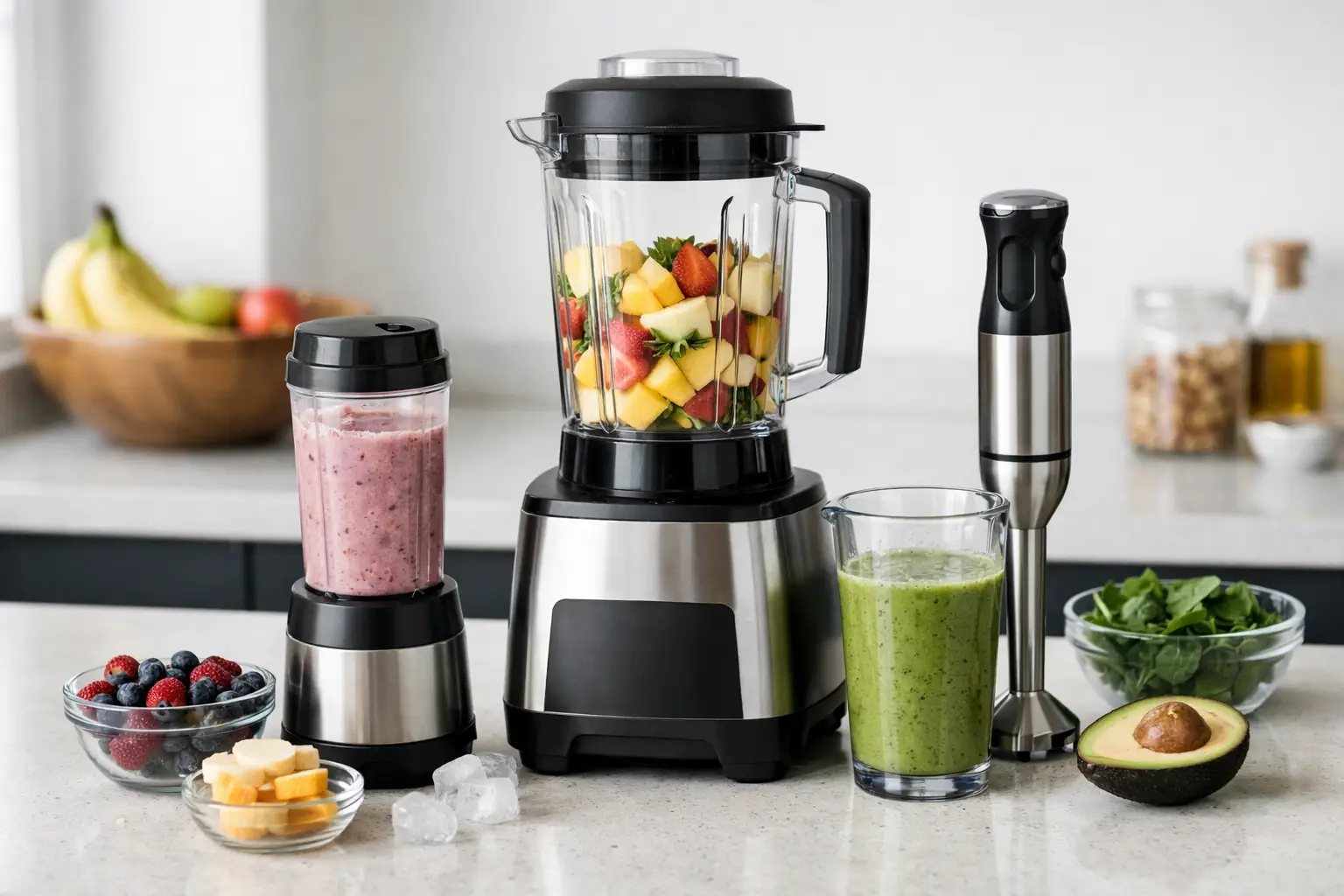
If you mainly want smoothies, protein shakes, soft fruit, yoghurt drinks and simple sauces, a personal blender is usually enough. These are small, easy to store and often come with drink bottles you blend into directly. For one person or a couple, they are often the most practical choice.
If you want to make larger batches, frozen drinks, soup, dips and family-sized smoothies, a jug blender makes more sense. You get more capacity and usually more power. That matters if you regularly blend tougher ingredients such as frozen berries, fibrous veg or ice.
If your main goal is blending soup in the pan, making baby food, mayo or small portions, a hand blender may be the better buy. It is often cheaper, takes up less room and works well for quick jobs. It is not ideal for every task, but it can be the most sensible option if you do not need a full-size machine.
So the first decision is not power or price. It is blender type. Get that right and the rest becomes easier.
The main blender types compared
Personal blenders
Best for single servings and simple drinks. They are compact, fast to clean and usually cheaper than larger models. For busy mornings, that convenience matters.
The trade-off is capacity and strength. Some models handle frozen fruit well, but not all do. If your recipes are heavy on ice, nuts or thick mixtures, check performance carefully before buying.
Jug blenders
This is the best all-round option for most households. A good jug blender can make smoothies, soups, sauces, milkshakes and crushed ice drinks. It suits families and anyone who batch-preps.
The downside is size. Jug blenders take up more cupboard or worktop space, and cheaper models can still struggle with hard ingredients. They also cost more than personal or hand blenders.
Hand blenders
These are best for quick blending straight in a bowl, jug or saucepan. They are useful for soup, sauces, purees and small jobs where setting up a larger blender feels like effort.
They are less suitable for thick frozen smoothies or anything that needs really smooth, powerful blending. Some hand blenders come with chopper bowls and whisk attachments, which can add value if you want a multi-use tool.
High-performance blenders
If you want silky smoothies, nut butters, crushed ice, frozen desserts or frequent daily use, a high-performance blender is worth considering. These are the premium end of the market.
They cost more, and many shoppers do not need that level of power. If you only blend bananas, milk and soft fruit a few times a week, you are unlikely to see the full benefit.
What blender do I need based on what I make?
This is the easiest way to narrow it down.
For smoothies with soft fruit and protein powder, buy a personal blender or a basic jug blender. For frozen fruit smoothies, look for a stronger motor and blades designed for ice and frozen ingredients.
For soup, a hand blender is often the simplest option if you blend directly in the pot. If you want smoother results or make bigger batches, a jug blender can work well, but only if it is suitable for hot ingredients.
For sauces, dips and dressings, both hand blenders and small jug blenders are good choices. Capacity matters here. If you usually make small amounts, a large jug can be awkward because ingredients may not reach the blades properly.
For crushing ice and frozen drinks, avoid low-powered models. This is one area where motor strength matters. A weak blender may leave chunks or wear out faster.
For nut butter or very thick blends, you need a stronger machine. Not every blender is built for heavy mixtures, so do not assume all jug blenders can do it.
How much power do you really need?
Power helps, but it is not the only thing that matters. Blade design, jug shape and build quality also affect results. Still, wattage is a useful guide.
For light blending such as soft fruit, shakes and sauces, lower wattage can be fine. For frozen fruit, ice and tougher ingredients, it is safer to go higher. If you want a blender that can handle a wider range of tasks without struggling, a mid-range or higher-powered jug blender is usually the better option.
Do not pay extra for high wattage alone. A badly designed blender can still perform poorly. For most UK shoppers, it is better to think in terms of use. Light use needs modest power. Regular tough blending needs more.
Capacity matters more than many people expect
It is easy to focus on motor size and ignore jug size, but capacity affects daily use.
A personal blender is usually enough for one serving. That is ideal if you want speed and less washing up. It is less useful if two people want drinks at the same time.
A standard jug blender suits couples and families better. It also helps if you batch-make soup or smoothies. Just remember that larger blenders need more storage space and can be less convenient for very small portions.
If kitchen space is tight, a hand blender or compact personal model can be the smarter buy even if a bigger machine offers more flexibility.
Features worth paying for
Some extras make a real difference. Some do not.
Variable speeds are useful if you blend different ingredients and want more control. Pulse is helpful for chopping and breaking down tougher items. Dishwasher-safe parts can save time, especially if you use the blender daily.
A secure lid matters if you blend liquids often. Non-slip feet help with stability. If you want to make soup, check whether the blender is designed for hot ingredients. Not every jug is.
Pre-set programmes can be handy, but they are not essential for most people. The same goes for smart features. For a buying guide, the best rule is simple: pay for features that solve a problem you will actually have.
Features you can usually ignore
You do not need lots of buttons to get good results. A blender with simple controls can be easier to live with.
Large accessory bundles also look better on the box than they often are in practice. If you only want smoothies, extra attachments may sit unused in a cupboard. Focus on the main job first.
Very cheap blenders with bold performance claims should also be treated carefully. If the price looks unusually low for the promised power, build quality may be the issue.
Common buying mistakes
The biggest mistake is buying for occasional use instead of regular use. If you make one frozen cocktail at Christmas, that should not decide your purchase. Buy for the jobs you will do every week.
Another common mistake is ignoring cleaning. A blender that is awkward to wash often gets used less. If convenience matters to you, choose a model with fewer fiddly parts.
Noise can also be an issue. High-powered blenders are rarely quiet. If you live in a flat or make early morning smoothies, this may matter more than headline performance.
Finally, do not overlook height. Some full-size blenders do not fit neatly under kitchen cupboards, which can make storage and everyday use more annoying than expected.
A simple way to choose faster
If you want the shortest route to the right decision, use this approach.
Buy a personal blender if you mostly make single-serve drinks and want something compact. Buy a jug blender if you want the most flexibility for family use, frozen ingredients and larger batches. Buy a hand blender if you mainly blend soup, sauces and small portions. Choose a high-performance model only if you regularly blend hard ingredients or want very smooth results across lots of tasks.
That is usually enough to narrow your options quickly. After that, compare capacity, cleaning, power and price.
If you are still asking what blender do I need, the safest answer is usually this: pick the simplest model that covers your real weekly use, not the most powerful one on the page. That is normally the better value buy, and the one you will actually keep using.