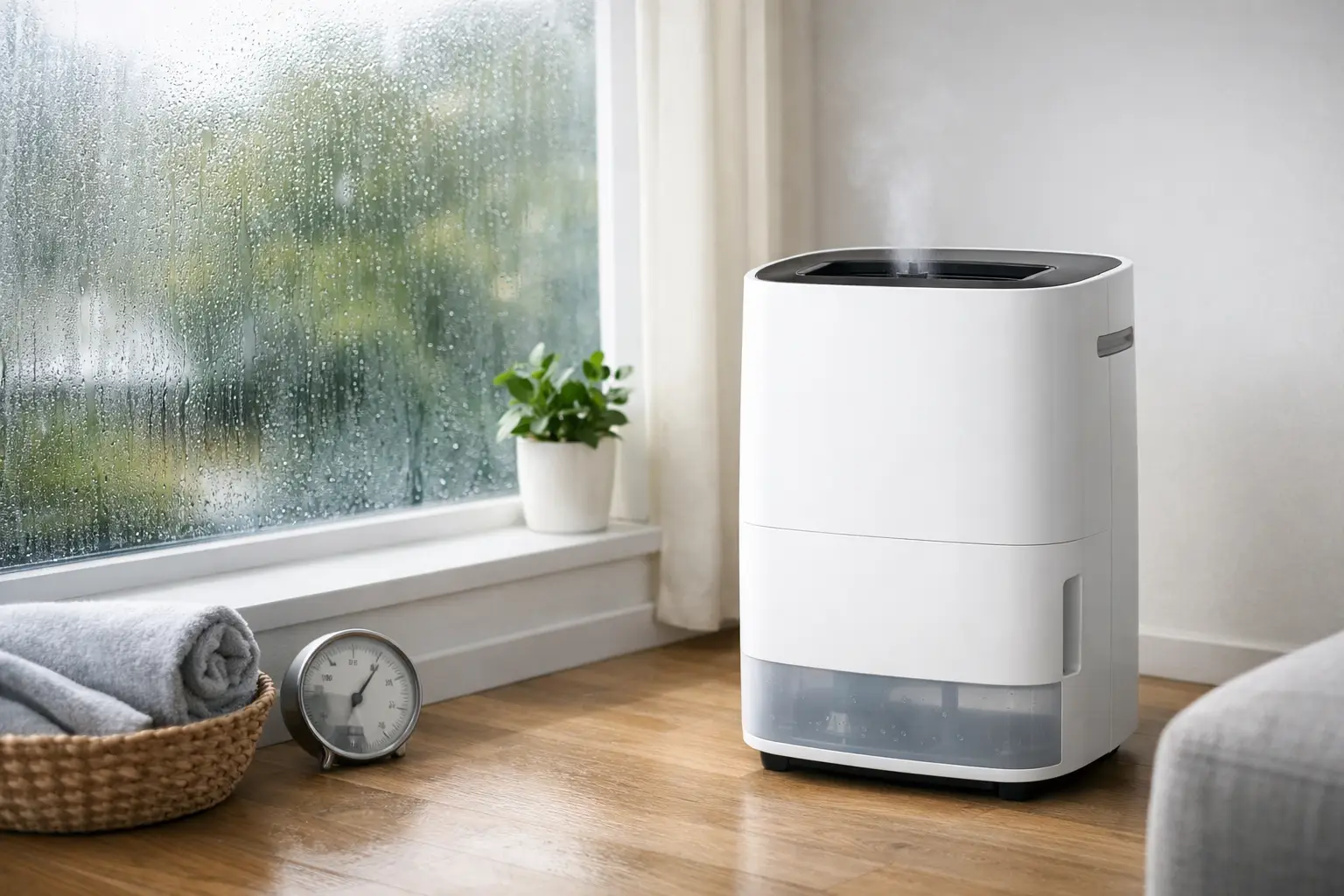
Condensation on windows every morning usually means you need to remove moisture from the air, not just wipe it away. If you are looking for the best dehumidifier for condensation, the right choice depends on room size, temperature, noise level and how often the problem appears.
A lot of buyers waste money by choosing on extraction rate alone. That number matters, but it is not the whole story. A dehumidifier that looks powerful on paper can still be the wrong fit if it is too loud for a bedroom, too small for a damp kitchen, or poor in cooler rooms.
See Our Top 10 Picks
Here are the 10 best models we tested and ranked to help you choose faster.
View Best ProductsWhat matters most when choosing the best dehumidifier for condensation
For most UK homes, condensation builds up in bedrooms, bathrooms, kitchens and box rooms with weak ventilation. In these cases, the best dehumidifier is usually one that can run regularly without being annoying to live with.
Start with room size. Small rooms and occasional window condensation can often be handled by compact compressor or desiccant models. Larger bedrooms, living rooms or open-plan spaces normally need a higher extraction rate and a larger water tank. If you buy too small, it will run longer, collect less water and feel like poor value.
Temperature also matters. Compressor dehumidifiers are often the better option in warmer rooms because they are usually cheaper to run and work well in typical heated spaces. Desiccant models tend to perform better in colder rooms, conservatories, garages and less-heated parts of the home. The trade-off is that they can cost more to run.
Noise is easy to overlook until the unit is in your bedroom overnight. If you want one for sleeping areas, look for a quieter model with a proper laundry or night mode rather than a high-power unit designed mainly for rapid extraction.
Running cost matters as much as purchase price. A cheaper model is not always the cheaper option over winter. Power consumption, how often you run it, and whether it reaches the target humidity quickly all affect value.
Compressor or desiccant for condensation?
This is usually the first decision.
Compressor models
Compressor dehumidifiers suit most heated homes. They are often the best choice for bedrooms, lounges and hallways where condensation is linked to everyday moisture from breathing, cooking and drying clothes. They are widely available, and many offer strong performance for the price.
Their weakness is colder spaces. If the room gets chilly, efficiency can drop. For a regularly heated home, that may not matter. For an unheated room, it often does.
Desiccant models
Desiccant dehumidifiers are often better where temperatures are lower. They can be a smart choice for winter condensation in colder bedrooms, garages or older homes with cool spots. They also tend to be lighter and can feel quicker at reducing damp air in small to medium rooms.
The downside is running cost. They usually use more electricity. If you plan to run the unit for long periods every day, that needs factoring into the decision.
Best dehumidifier for condensation in different rooms
The right model changes by room.
Bedroom
For bedrooms, prioritise low noise and a sensible tank size. You do not need the most powerful machine on the market for a standard UK bedroom. A quiet compressor model is often enough if the room is heated. If the room gets cold and condensation is heavy, a desiccant model may be better.
Bathroom
Bathrooms create short bursts of high humidity. A dehumidifier can help, but it should not replace extraction. Here, portability matters because many people move the unit in after showers rather than leaving it there permanently. A model with easy controls and quick moisture removal is usually more useful than one loaded with extra features.
Kitchen
Kitchens need a unit that can deal with regular moisture from cooking and boiling kettles. If the space is medium or large, avoid very small budget models. They often struggle to keep up.
Living room
In living rooms, a compressor dehumidifier is usually the practical option. You will want decent extraction, a larger tank and a humidity setting so it can maintain a comfortable level without running constantly.
Conservatory or garage
These spaces are where desiccant models often make more sense. Cooler air can reduce compressor performance, especially in winter.
Features worth paying for
Some extras genuinely help. Others do not change much.
A built-in humidistat is worth having. It lets you set a target humidity, so the unit switches on and off as needed. That makes it easier to manage condensation and avoid wasting electricity.
A continuous drainage option is useful if you have a persistent problem or do not want to empty the tank often. This matters more in heavily affected rooms or if the unit runs every day.
Laundry mode can be useful if you also dry clothes indoors. That said, do not buy a dehumidifier just because it claims to dry washing quickly. Focus first on how well it handles your actual condensation problem.
Auto shut-off is standard on many models and is worth having. A clear water tank window is also helpful. It sounds minor, but it makes day-to-day use easier.
Air purification claims are less important. Some dehumidifiers include filters, but if your main problem is window condensation, moisture removal should stay the priority.
Common buying mistakes
The most common mistake is buying too small. A tiny unit may look cheaper, but it can struggle in medium rooms or homes with regular condensation. That often leads to disappointment.
Another mistake is ignoring room temperature. If you need a unit for a cold room, do not assume a standard compressor model will perform at its best.
Some buyers also focus too much on maximum extraction figures. Those figures are usually based on ideal conditions. Real-world performance in a UK home may be lower, especially in winter.
Tank size is another point people miss. A small tank means more emptying. For occasional use that may be fine. For daily use, it becomes annoying fast.
Finally, do not ignore dimensions and weight. If you plan to move the unit between rooms, portability matters. A heavier machine with no decent handle is less convenient than it first appears.
How to compare models faster
If you want to narrow down options quickly, compare on these points first: type, extraction rate, suitable room size, noise level, tank size and power use. That usually tells you more than a long list of minor features.
For a standard heated bedroom or living room, a compressor model with moderate extraction, low noise and a humidistat is often the safe choice. For colder spaces or winter-heavy condensation, look harder at desiccant models. For larger rooms, step up the extraction rate and tank capacity.
Price should be judged against expected use. If you only need it occasionally, a cheaper model may be enough. If you expect to run it through autumn and winter, reliability and running cost matter more.
On a comparison site such as Best Product Compare, this is where side-by-side specs help most. You do not need the model with the longest feature list. You need the one that suits your room and how often you will use it.
Which type of buyer needs which kind of dehumidifier?
If you want the simplest answer, most buyers fit into one of a few groups.
If you have light to moderate condensation in a heated bedroom or lounge, choose a quiet compressor dehumidifier. If you have a cold room, older property or winter condensation that stays bad even with heating on, a desiccant model is often the better fit. If you want one machine for a larger family space, buy for room size first and do not under-spec it.
If noise bothers you, do not compromise. A slightly less powerful model that you can live with every day is often the better buy than a louder one that gets switched off.
Final thought
The best dehumidifier for condensation is not the one with the biggest headline number. It is the one that matches your room, your temperature conditions and how often you need it. Get those three things right, and choosing becomes much quicker.