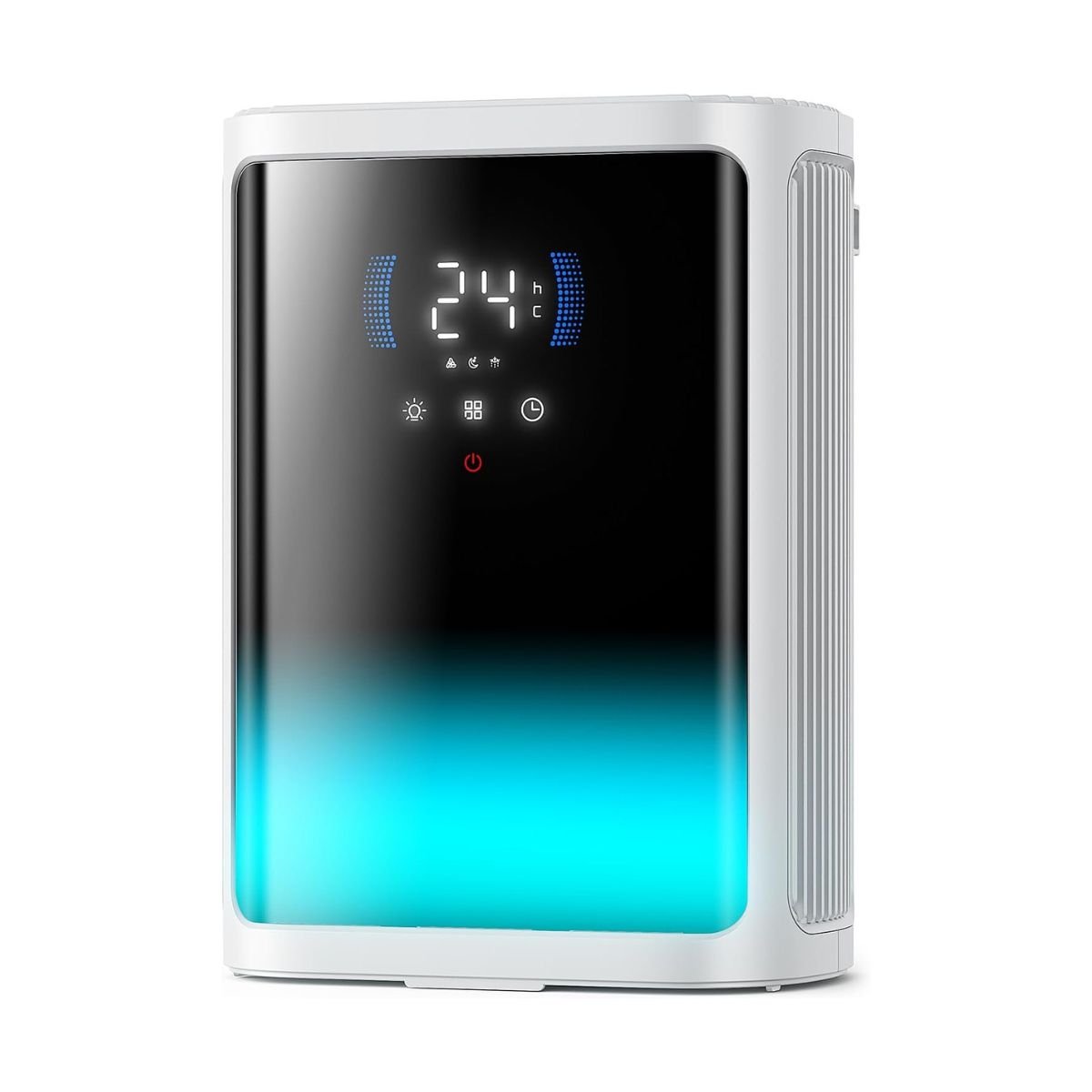
Damp walls, condensation, musty smells, and sluggish laundry drying—if these are familiar, a dehumidifier can help. With dozens of options from £30 tubs to £300+ smart units, choosing isn’t simple.
Next, let’s break down everything you need to know before buying, from understanding specs in plain English to identifying which type works best for your home—so you can make an informed decision.
See Our Top 10 Picks
We’ve compared the most popular products to help you choose faster.
View Best Products
What Does a Dehumidifier Actually Do?
A dehumidifier removes excess moisture from the air, either collecting it in a tank or continuously draining it. Benefits include reduced condensation, less mould, faster laundry drying, and a fresher home.
The ideal indoor humidity for a UK home is between 40% and 60% relative humidity (RH). Below 40%, and the air appears dry and irritating. Above 60%, and you’re in a territory where mould, dust mites, and damp damage thrive.
Most dehumidifiers let you set your target humidity, then automatically turn on and off to maintain it. You don’t need to constantly monitor it.
The 3 Types of Dehumidifier – and Which Is Right for You
1. Compressor Dehumidifiers
The UK’s most common type. They draw air over a cold coil, condensing moisture into the tank—like a cold drink sweating on a warm day.
Best for: Living rooms, bedrooms, kitchens, hallways – anywhere above 15°C
Extraction rate: 10–30 litres per day
Pros: Efficient, effective, widely available
Cons: Performance drops in cold rooms (below 15°C)
2. Desiccant Dehumidifiers
These use moisture-absorbing material (usually silica gel) instead of refrigeration. They operate well at low temperatures and slightly warm the room.
Best for: Cold rooms, garages, conservatories, caravans, unheated spaces
Extraction rate: Lower than compressor models, but consistent at low temps
Pros: Works in the cold, quieter, lighter
Cons: Uses more electricity per litre extracted, less common in mainstream UK retail
3. Disposable/Passive Moisture Absorbers
Tubs or sachets filled with crystals (like calcium chloride) absorb moisture without electricity.
Best for: Small enclosed spaces – wardrobes, under sinks, caravans, storage units
Pros: No power needed, cheap, zero maintenance
Cons: Not suitable for whole-room use, crystals need replacing regularly
The short version: For most UK homes, a compressor dehumidifier is the right choice.
Key Specs Explained in Plain English
Dehumidifier shopping means lots of specs. Here’s what actually matters:
Extraction Rate (Litres Per Day)
Extraction rate is the amount of water the unit removes daily. Manufacturers test under peak conditions (usually 30°C and 80% RH), which are warmer and more humid than typical UK homes. Actual extraction will be lower.
| Room Size | Recommended Extraction Rate |
| Small bedroom/bathroom (up to 15m²) | 10–12 litres/day |
| Medium room (15–30m²) | 12–20 litres/day |
| Large room / open plan (30–50m²) | 20–25 litres/day |
| Whole home/basement | 25–30 litres/day |
Tank Size (Litres)
Tank size is the amount of water you can collect before the tank empties. A bigger tank means less frequent emptying. Most home units hold 2–4 litres. Choose units with a continuous drainage option for hands-free use.
Noise Level (dB)
Most compressor dehumidifiers run at 40–55 dB. For context: 30 dB is a quiet library.
- 40 dB = quiet room
- 55 dB = normal conversation
If you’re using it in a bedroom, prioritise models with a sleep mode that drops noise and dims the display.
Energy Consumption (Watts)
Smaller units (10–12L/day) use 150–200W. Larger units use 250–350W. Running a 200W unit for 8 hours costs roughly £0.38 at current
UK prices—reasonable for the results.
Auto Humidity Control
Auto humidity control lets the unit monitor and automatically maintain target humidity, saving energy and preventing over-drying.
Features That Are Actually Worth Paying For
Continuous drainage hose: Connect to a drain or sink and avoid manually emptying the tank. Essential for basements or unsupervised use.
Laundry drying mode: Operates at higher extraction rates for faster laundry drying. Ideal during UK winters, compared with standard modes that extract moisture less aggressively. Compare according to laundry needs and seasonal use.
Auto defrost: Prevents coils from icing in cooler temperatures, unlike standard units that may freeze. Particularly useful during spring and autumn in rooms prone to lower temperatures.
Digital humidity display: Shows and sets exact target humidity for accurate regulation, which is more reliable than units without displays that rely on guesswork. Compare based on the desired control level.
Auto-restart: Restores settings after power outages, preventing configuration loss. This differs from units lacking auto-restart, which require manual setup after power outages.
Features You Can Skip
Wi-Fi/App control: Enables remote adjustment but increases cost. For most users, manual control suffices unless remote operation is essential. Weigh cost against necessity for your needs.
Ioniser: Claims air purification. The evidence is weak. Don’t pay extra.
Coloured LED lights: Genuinely irrelevant to performance. Looks nice, adds nothing.
Common Mistakes When Buying a Dehumidifier
Buying too small: a 10 L/day unit in a 50 m² area will run constantly, struggling to help. Size up.
Ignoring running costs: cheap units with lower efficiency can cost more yearly than pricier, more efficient models. Check wattage, not just price.
Expecting instant results: a dehumidifier works over days or weeks, not hours. Give it time to decrease humidity gradually.
Placing against a wall: most units require at least 20cm clearance for proper airflow. Poor placement reduces performance.
Using compressor models in cold garages or conservatories, below 15°C, efficiency drops. Choose a desiccant model instead.
How to Use a Dehumidifier Effectively
- Keep doors and windows closed when running—it keeps moisture out of the room, not in.
- Empty the tank regularly or connect a drain hose for continuous use.
- Set the target humidity to 50% RH initially, then modify based on comfort.
- Run on a timer during the day if noise is a concern.
- Clean the air filter every few weeks to maintain high efficiency.
Ready to Choose Your Dehumidifier?
Now that you know what you’re looking for, our comparison page lists the current Top 10 best dehumidifiers available in the UK, ranked by extraction performance, noise levels, energy efficiency, and real buyer reviews.
See Our Top 10 Picks
We’ve compared the most popular products to help you choose faster.
View Best ProductsEvery model on our list has been selected from thousands of verified reviews across Amazon, Argos, Currys, and other UK retailers, so you’re only seeing the best of what’s actually available right now.