A fan that is too loud, too weak or too big for the room quickly becomes a bad buy. If you are trying to find the best cooling fan for bedroom use, the right choice usually comes down to four things: noise, airflow, size and night-time usability.
Bedroom fans need a different balance from fans used in a home office or lounge. Strong airflow matters, but so does sleep comfort. A model that cools quickly in the evening may still be annoying at 2am if the motor hums, the controls beep or the lights stay on. That is why it helps to narrow the options by room size and sleeping needs before comparing products.
See Our Top 10 Picks
Here are the 10 best models we tested and ranked to help you choose faster.
View Best ProductsWhat matters most in the best cooling fan for bedroom use
For most UK shoppers, quiet performance should come first. A fan can have good reviews for power and still be a poor bedroom choice if the lowest setting is noisy. Look for products described as quiet, low-noise or suitable for night use, but do not rely on that alone. Check whether reviewers say it stays quiet only on the first speed setting, because higher settings often sound very different.
Airflow comes next. A bedroom fan does not need to feel harsh, but it should move enough air to make the room more comfortable. Oscillation helps here. It spreads air across the bed and around the room instead of blowing in one fixed direction. That often feels better overnight and can stop you waking up to reposition the fan.
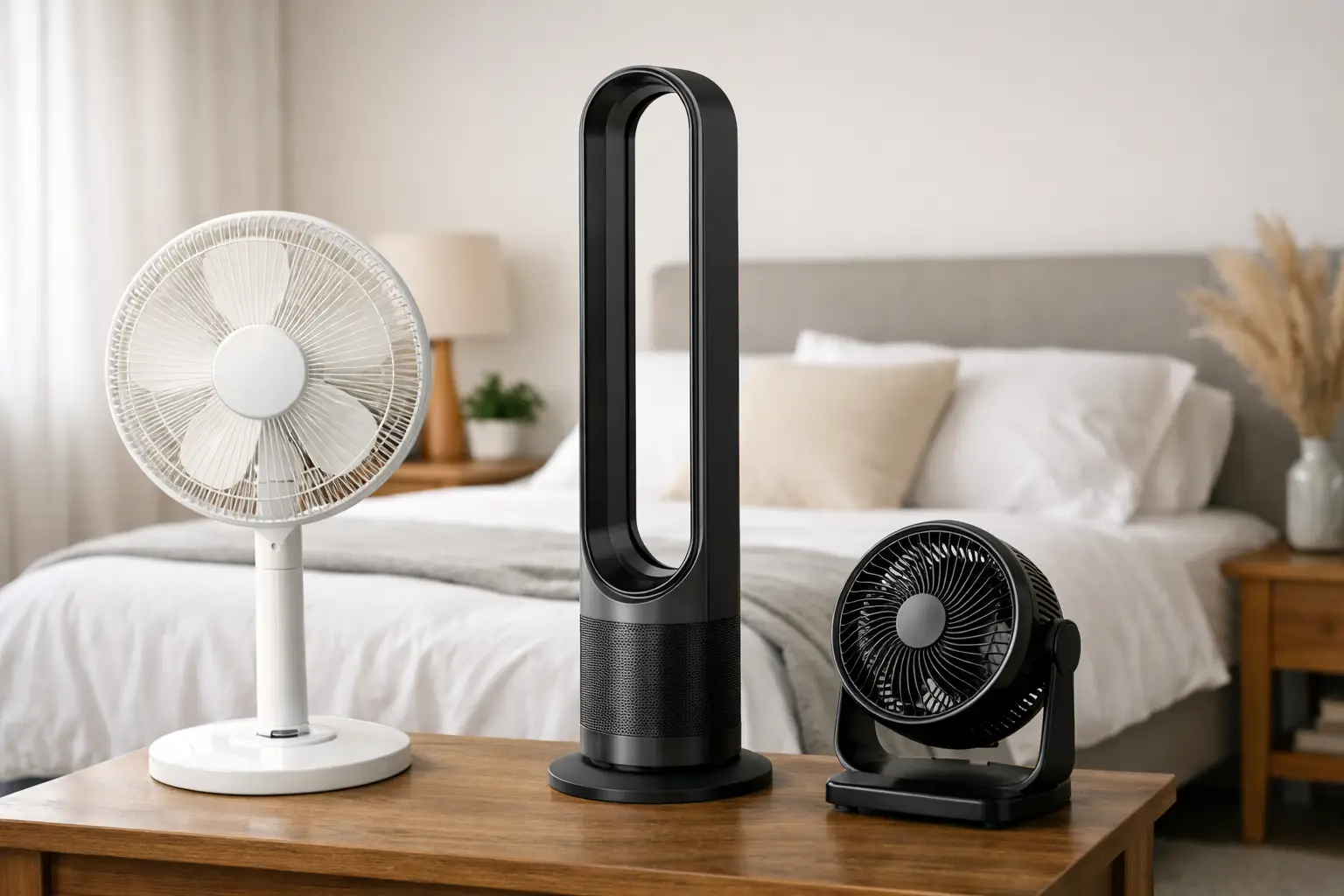
Size also affects comfort. A large pedestal fan can move more air, but it may take up too much floor space in a small bedroom. A compact tower fan or desk fan may fit better, especially in box rooms, spare rooms or flats where space is tight.
Controls are easy to overlook, but they matter every night. A remote control is useful if you do not want to get out of bed to change speed. A timer is even more useful. It lets the fan switch off after you fall asleep, which can save energy and stop the room feeling too cool by early morning.
Which fan type is best for a bedroom?
There is no single best option for every room. The best type depends on layout, noise tolerance and how much airflow you need.
Tower fans
Tower fans are often the easiest fit for bedrooms. They are slim, usually quiet on lower settings and take up less floor space than pedestal fans. Many also include timers, remotes and sleep modes.
They are a strong choice for small to medium bedrooms where you want balanced airflow and a tidier footprint. The trade-off is that some tower fans do not feel as powerful as larger bladed models, especially in warm attic rooms or larger spaces.
Pedestal fans
Pedestal fans are a good option if airflow matters more than appearance or compact size. They tend to move more air and usually offer height adjustment, which helps if you want airflow directed over the bed.
The downside is noise and bulk. Some are excellent, but many cheaper models are more noticeable at night. They also take up more floor space and can look intrusive in a smaller bedroom.
Desk or table fans
Desk fans work best for very small rooms, bedside use or single sleepers who want direct airflow. They are usually cheaper and easy to move from room to room.
The limit is coverage. A desk fan may cool one person well but do little for the rest of the room. If two people share the room, it may not be enough unless the bedroom is very small.
Air circulators
Air circulators are designed to move air around the whole room rather than just blow forwards. In bedrooms, that can help reduce stuffiness and create more even airflow.
They can be effective, but some are noisier than standard fans on stronger settings. They are often better for people who want room-wide circulation and do not mind testing positioning to get the best result.
How to choose the right size and airflow
Room size should guide your shortlist. For a small bedroom, a compact tower fan or quality desk fan is often enough. In a medium room, a tower fan or mid-size pedestal fan usually gives the best balance. For large bedrooms, hotter loft conversions or rooms with poor ventilation, a stronger pedestal fan or high-performance tower fan makes more sense.
Do not assume the biggest fan is automatically better. In a bedroom, too much airflow can be as annoying as too little, especially if it is pointed directly at your face all night. Adjustable speed settings matter because they let you use stronger airflow before bed and lower settings once you are trying to sleep.
If the product lists airflow figures, use them as a rough comparison rather than a final answer. Real-world comfort also depends on oscillation range, room layout and where the fan sits in relation to the bed.
Noise levels: the feature most buyers regret ignoring
Many bedroom fan returns happen for one reason: noise. A model can look ideal on paper and still be too loud for light sleepers.
If you are sensitive to sound, focus on products with a quiet mode or sleep mode. These are not always silent, but they are more likely to reduce motor noise and airflow harshness. Also check whether the fan makes extra sounds such as rattling grilles, control beeps or clicking when oscillating. Those small noises often stand out more at night than steady airflow sound.
A fan with more speed settings can help. Instead of choosing between weak and loud, you get finer control. That makes it easier to find a setting that is cool enough without disturbing sleep.
Features worth paying for
Not every extra feature matters, but a few can make a clear difference in a bedroom.
A timer is one of the best features to have. It improves comfort and can cut running time. A remote control is also worth having, especially with tower fans placed across the room.
A dimmable display or display-off setting is useful if you sleep in a dark room. Bright LEDs are a common complaint with bedroom appliances. Night mode is another genuinely useful feature if it reduces fan speed gradually or turns off lights and sounds.
Height adjustment matters most on pedestal fans. For tower fans, look instead at overall height and whether the airflow reaches bed level.
An easy-clean design is worth considering too. Fans collect dust quickly in bedrooms. If the grille is hard to remove, cleaning becomes a chore, and performance can drop over time.
Features you can treat as optional
Some features sound better than they perform. Built-in air purification is often limited compared with a dedicated air purifier. Scent trays and similar extras rarely matter for cooling. App control can be convenient, but for a bedroom fan, a simple remote is usually enough.
If you are comparing two models at very different prices, focus first on airflow, noise, timer and usability. Those are the features you will notice every day.
Common buying mistakes
Choosing on looks alone is one of the most common mistakes. A stylish fan that is awkward to use, noisy at night or weak in a warm room will not feel like good value.
Another mistake is ignoring bedroom size. A small bedside fan may be fine in a compact room but disappointing in a main bedroom. On the other hand, a powerful pedestal fan can feel excessive in a small space.
It is also easy to overlook control lights and sound alerts. If you are a light sleeper, small details matter. A loud confirmation beep or bright screen can become irritating very quickly.
Finally, do not focus only on the top speed. Bedroom comfort usually depends more on how usable the lower and middle settings are.
Quick way to narrow down the best cooling fan for bedroom buying
If you want the fastest route to the right choice, start with fan type. For most people, a tower fan is the safest bedroom option because it balances space, noise and features. If your room runs very warm, compare stronger pedestal fans as well. If space is very limited or you only need direct airflow, look at desk fans.
Then filter by sleep-friendly features. Prioritise quiet operation, a timer, oscillation and a display that can dim or switch off. After that, compare size, remote control and cleaning access.
This approach helps you ignore features that sound impressive but do little for actual bedroom comfort.
When a bedroom fan may not be enough
A fan helps you feel cooler by moving air, but it does not lower room temperature in the way an air conditioner does. If your bedroom gets extremely hot during heatwaves, especially in top-floor rooms, even a very good fan has limits.
In that case, choose the strongest practical fan for your room and focus on usability at night. A powerful but tolerable fan is usually better than a quieter model that does not move enough air to help.
The best cooling fan for bedroom use is the one you can sleep with, not just the one with the highest power rating. Compare noise, airflow and night features first, and the right option usually becomes much easier to spot.