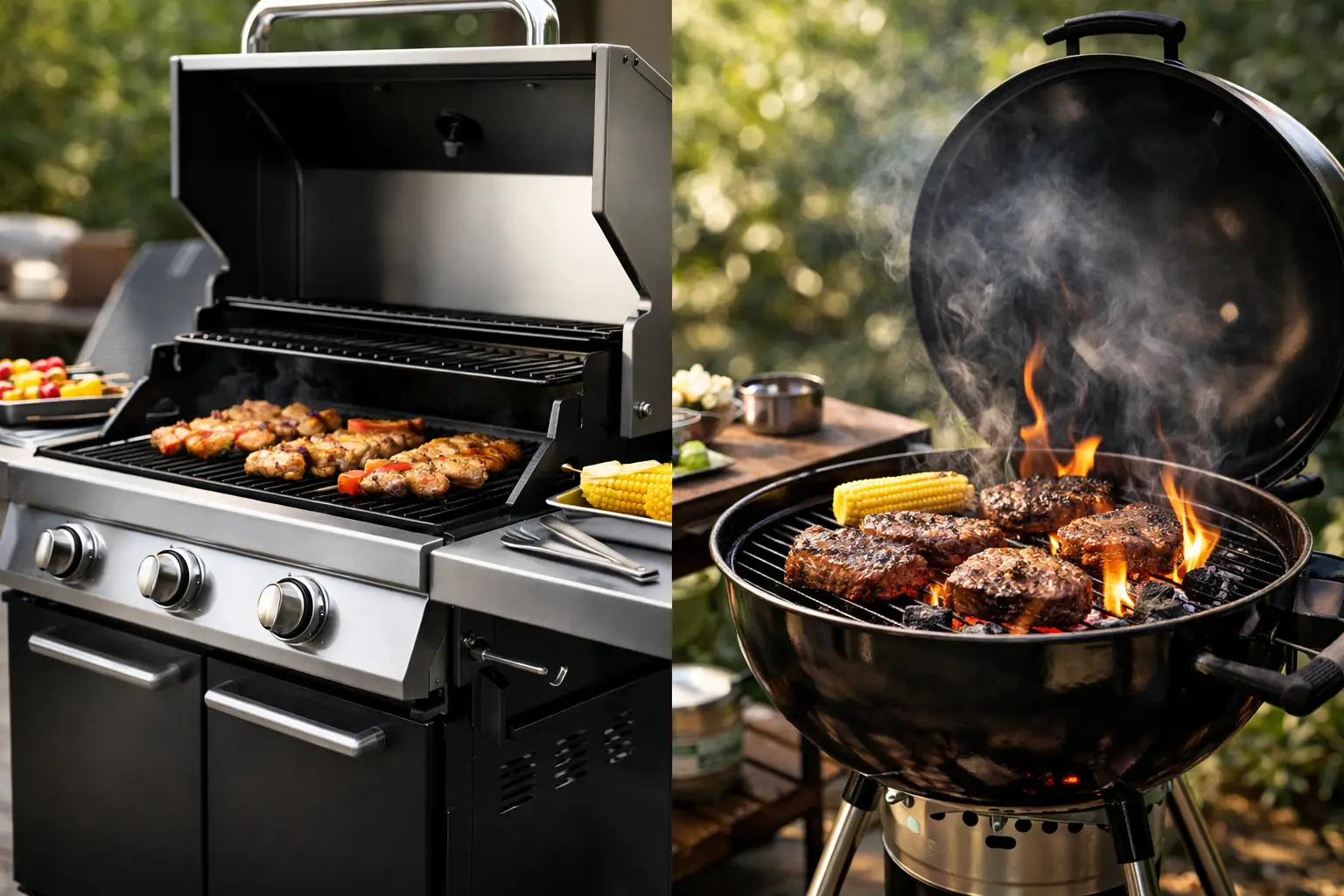
Choosing between a petrol or charcoal BBQ usually comes down to one thing – how you actually plan to use it. If you want quick midweek grilling with less mess, petrol is often the better fit. If you care more about smoky flavour and lower upfront cost, charcoal can make more sense.
Both types can cook well. The better choice depends on your budget, garden space, patience and how often you barbecue. The fastest way to decide is to compare them on the points that matter most before you buy.
See Our Top 10 Picks
Here are the 10 best models we tested and ranked to help you choose faster.
View Best ProductsPetrol or charcoal BBQ: the main difference
A petrol BBQ is built for convenience. You turn the burners on, set the heat and start cooking after a short preheat. It is easier to control, easier to use regularly and usually better for people who want predictable results.
A charcoal BBQ takes longer. You need to light the fuel, wait for the coals to reach the right temperature and manage airflow during cooking. In return, many buyers prefer the traditional barbecue flavour and the simpler, lower-cost design.
If you want speed and control, look at petrol first. If you want flavour and a cheaper starting point, charcoal is often the stronger option.
Which is easier to use?
For most UK shoppers, petrol is easier.
You get push-button ignition on many models, faster heat-up times and better temperature control. That matters if you are cooking for family, using the barbecue often or do not want to spend time learning how to manage fuel and vents.
Charcoal needs more effort. Lighting can be slow, especially in colder or windy UK weather. Heat control is less exact, and cooking can be uneven until you get used to it. Some people enjoy that hands-on process. Others try it a few times and then want something simpler.
If this is your first barbecue, a petrol model is usually easier to live with.
Which gives better flavour?
Charcoal usually wins on flavour.
That is the main reason many buyers still choose it. Food cooked over charcoal often has a smokier, more traditional barbecue taste. If flavour is your top priority and you do not mind the extra setup, charcoal is hard to beat.
Petrol can still produce very good results. Better models with flavour bars or similar heat plates can improve taste and reduce flare-ups. But if you are expecting the same smoky finish as charcoal, you may be disappointed.
This is one of the clearest trade-offs. Petrol is easier. Charcoal often tastes better.
Which is cheaper to buy and run?
Charcoal BBQs are usually cheaper to buy.
If you want a basic kettle barbecue or a simple grill for occasional summer use, charcoal gives you more low-cost options. This makes it a strong choice for buyers on a tighter budget or anyone unsure how often they will use it.
Petrol BBQs cost more upfront. Even smaller models are often noticeably more expensive than charcoal alternatives. Larger petrol barbecues with side burners, cabinets and multiple cooking zones cost more again.
Running costs depend on how often you cook and what fuel prices look like. Charcoal can become expensive over time if you barbecue regularly, especially if you use good-quality lumpwood or briquettes. Petrol is often more economical for frequent use, but you need to factor in propane cylinders or a suitable petrol supply.
If your budget is tight now, charcoal is usually easier to afford. If you plan to barbecue often, petrol can make more sense over the longer term.
Which is better for heat control?
Petrol is better for control. There is not much debate here.
With multiple burners, you can create different heat zones and adjust them quickly. That helps when cooking different foods at the same time, such as burgers on high heat and chicken on a lower setting. It also makes it easier to avoid burning food while the middle stays undercooked.
Charcoal can get very hot, which is great for searing. But fine control is harder. You manage heat by moving coals, adjusting vents and changing where food sits on the grill. It works, but it takes more attention.
If you want straightforward cooking with fewer surprises, petrol is the safer buy.
Which is faster?
Petrol is much faster from start to finish.
Most petrol barbecues are ready to cook within 10 to 15 minutes. When you are done, you turn them off and let them cool. That makes a big difference if you want to cook on weeknights or use the barbecue in short weather windows.
Charcoal needs more time. You may spend 20 to 30 minutes just getting the coals ready, sometimes longer. Cleanup also takes longer because you are dealing with ash and leftover fuel.
For occasional relaxed weekend cooking, that may not matter. For quick, regular use, it usually does.
Cleaning and maintenance
Petrol is not maintenance-free, but charcoal is usually messier.
With charcoal, you need to empty ash, deal with soot and clean the grate after each use. If the weather changes suddenly, leftover ash can become unpleasant fast. Storage can also be less tidy if you are keeping bags of charcoal in a shed or garage.
Petrol barbecues avoid ash, but they have more parts. Burners, drip trays and grease management systems need cleaning. Over time, parts may wear out or need replacing. So while petrol is cleaner day to day, it can need more ongoing maintenance.
If you hate mess, petrol is usually the easier option. If you want a simpler barbecue with fewer components, charcoal still has appeal.
Space, portability and storage
Charcoal BBQs are often easier to move and store.
Many charcoal models are compact and lightweight, especially kettle designs. That suits smaller patios, occasional use and buyers who want to tuck the barbecue away when not in use.
Petrol BBQs are usually larger and heavier. You also need space for the petrol bottle. If you have a small garden, limited storage or narrow access, size matters more than you might think.
On the other hand, if you regularly cook for larger groups, the bigger cooking area on many petrol models can be a clear advantage.
Before choosing either type, check the full assembled dimensions, not just the grill size.
What type of buyer should choose petrol?
A petrol BBQ is usually the better choice if you want convenience first. It suits buyers who plan to cook often, want more control and do not want to spend time lighting fuel or cleaning ash.
It is also a good fit for families, beginners and anyone cooking different foods at once. If you want reliable results with less effort, petrol is the more practical buy.
You should lean towards petrol if these points matter most:
- Quick start and faster cooking
- Better temperature control
- Easier for beginners
- Cleaner day-to-day use
- Better for frequent barbecuing
What type of buyer should choose charcoal?
A charcoal BBQ suits buyers who care most about flavour and lower upfront cost. It is often the right pick for occasional use, smaller budgets and shoppers happy to spend more time setting up and managing the fire.
It also works well if you prefer a more traditional barbecue experience and do not need exact temperature control.
You should lean towards charcoal if these points matter most:
- Smokier barbecue flavour
- Lower purchase price
- Simpler construction
- Often smaller and easier to store
- Better for occasional use
Common buying mistakes
The biggest mistake is buying for the idea of barbecuing rather than your real habits.
If you picture slow weekend grilling but mostly want quick burgers after work, charcoal may become frustrating. If you buy petrol for convenience but only use the barbecue a few times each summer, the extra cost may not feel worthwhile.
Another common mistake is ignoring size. A large petrol barbecue looks useful, but it can be excessive for a small household and awkward to store. With charcoal, very cheap models can also disappoint on build quality, heat retention and grill space.
Think about frequency, not just features. How often will you use it? How many people do you cook for? How much setup are you genuinely willing to do?
So, petrol or charcoal BBQ?
If you want the easiest option for regular use, buy petrol. It is quicker, simpler and better for controlled cooking. For most households, that makes it the more practical all-round choice.
If you want stronger barbecue flavour and a lower entry price, buy charcoal. It asks more from you, but many shoppers feel the taste is worth it.
The right choice is the one that matches how you cook, not the one with the longest feature list. If you compare on ease, flavour, cost and space first, the decision gets much simpler.