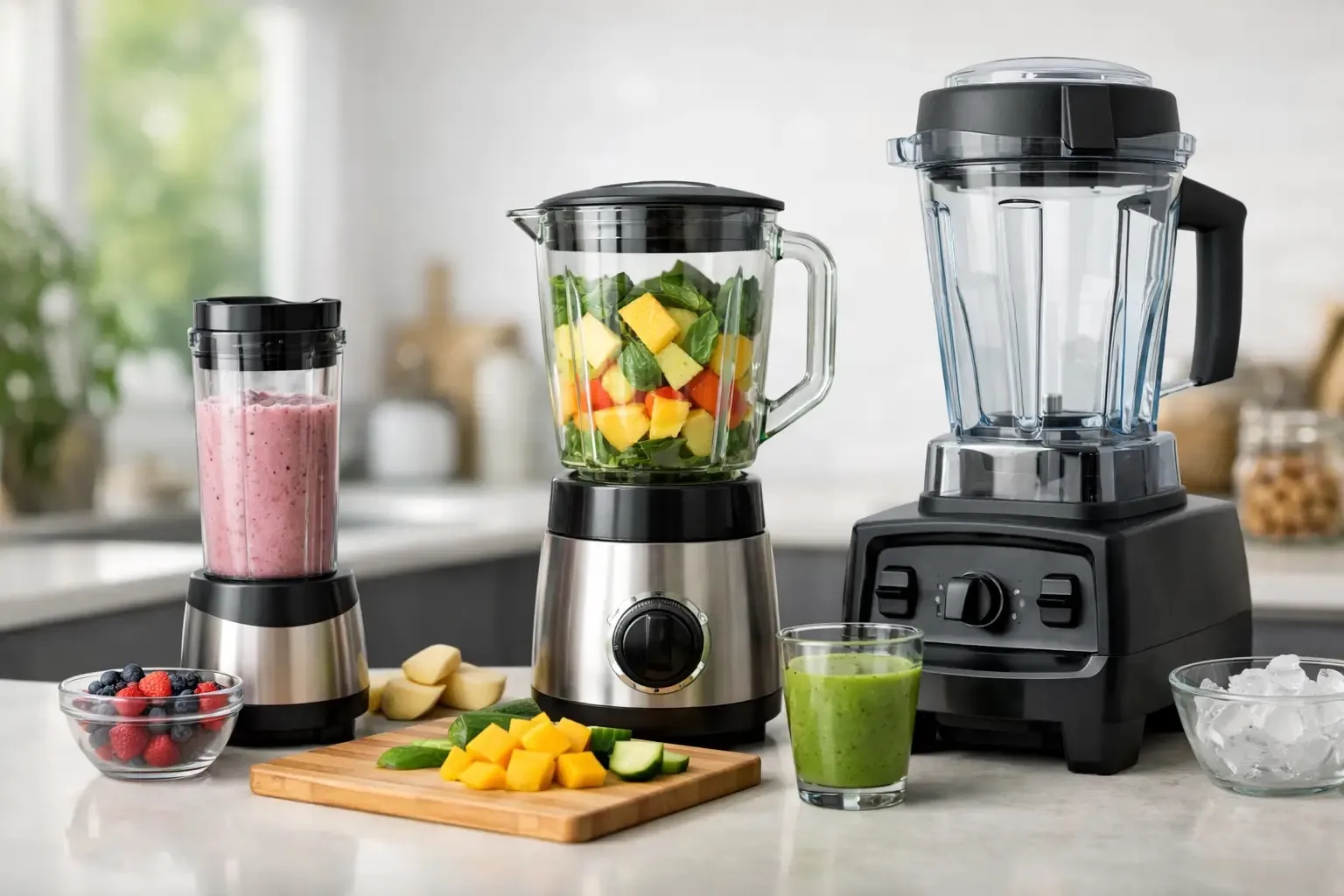
If you are comparing the best blender for smoothies, start with one question: do you want quick breakfast drinks, thicker protein shakes, or smooth blends with frozen fruit every day? The right choice depends less on brand names and more on power, jug size, blade design and how much effort you want to spend on cleaning.
A lot of shoppers buy on wattage alone and end up with the wrong machine. A high-powered blender can be useful, but it is not always the best value. For smoothies, what matters most is whether it can crush ice, break down frozen fruit, and leave fewer bits of skin or seeds behind. That is what makes daily use easier.
See Our Top 10 Picks
Here are the 10 best models we tested and ranked to help you choose faster.
View Best ProductsHow to choose the best blender for smoothies
For most people, the best blender for smoothies is one that fits their routine. If you only make one drink before work, a personal blender often makes more sense than a large jug model. If you make drinks for two or three people, or want to batch-prep, a full-size blender is usually the better buy.
Think about texture first. Softer ingredients like banana, yoghurt and oats are easy for most blenders. Frozen berries, ice, nut butter and fibrous greens are more demanding. If those are regular ingredients, choose a model with stronger motor performance, sharp stainless steel blades and a pulse setting.
Price also matters. Cheap blenders can handle simple smoothies, but they often struggle with frozen ingredients and may leave a grainier finish. Mid-range models tend to be the sweet spot for most people. They offer better blending consistency, stronger jugs and more reliable lids without the price jump of premium machines.
Personal blender or jug blender?
This is the first real decision. It will narrow your options fast.
Personal blenders
Personal blenders are best for single servings. You blend in a compact cup, swap on a travel lid, and take it with you. They suit busy mornings, smaller kitchens and buyers who want less washing up.
They do have limits. Cup capacity is smaller, so they are not ideal for family use. They can also struggle if you overfill them with frozen fruit or thick ingredients. If you mainly want a banana smoothie, protein shake or fruit blend for one person, they are often enough.
Jug blenders
Jug blenders are better if you make larger servings or want more flexibility. They usually deal with tougher ingredients more easily, and they are more useful beyond smoothies. Soup prep, sauces and crushed ice are more realistic on a larger machine.
The trade-off is size. Jug blenders take up more worktop space and usually mean more parts to clean. For buyers with limited storage, that can be enough to rule them out.
What actually matters when comparing models
Product pages often throw in long feature lists. Most of them do not matter much. Focus on the basics that affect daily use.
Motor performance
More power can help, especially with frozen fruit and ice, but raw wattage is only one part of the picture. Blade shape, jug design and programme settings also affect results. As a rough guide, a lower-powered blender can work for soft fruit smoothies, while regular frozen blending usually benefits from a stronger machine.
If your main goal is smooth green smoothies, protein shakes or frozen drinks, avoid the weakest entry-level models. They can work, but often need extra liquid, more shaking between blends, and more patience.
Blade quality
Sharp, durable stainless steel blades matter more than many buyers expect. Good blades help pull ingredients down and blend evenly. Poorer designs can leave chunks at the top and overwork the motor at the bottom.
Detachable blades can help with cleaning, but fixed blade systems are common too. Neither is automatically better. Look at how easy it is to rinse, wipe and reassemble.
Jug or cup size
Do not buy too small and assume it will be fine. Smoothie ingredients take up more room before blending than after. A personal cup that looks generous on paper can feel cramped once you add frozen fruit, milk and extras.
For one person, a personal cup may be enough. For couples or families, a larger jug is more practical. If you make packed lunches or post-gym shakes, spare cups can also be useful.
Ease of cleaning
This is one of the biggest differences between blenders that get used daily and ones that end up in a cupboard. If the lid is awkward, the blade area traps bits, or the jug cannot be cleaned quickly, it becomes annoying fast.
Dishwasher-safe parts can help, but hand washing is still common. Smooth inner surfaces, simple lids and easy-access blade areas are usually better than lots of fiddly design details.
Build quality
Smoothie blenders deal with repeated strain. Thin plastic cups, loose lids and weak seals wear out first. A model does not need to feel premium, but it should feel stable. A solid base, secure jug fit and firm lid lock are all good signs.
If you plan to use the blender every day, build quality is worth paying for. It usually means fewer leaks, less movement on the worktop and better durability over time.
Features worth paying for and features you can skip
Some extras help. Many do not.
Pre-set smoothie programmes can be useful if they genuinely simplify use. They are helpful for buyers who want one-button blending and consistent results. A pulse function is often more useful than multiple niche programmes because it gives you more control with thicker mixes.
Variable speed settings can also be worthwhile on a jug blender. They help if you blend different ingredients often. On a simple personal blender, they are less essential.
What can usually be skipped? Large recipe books, too many presets, unnecessary displays and marketing terms that do not explain real performance. If a blender cannot handle frozen berries well, extra buttons will not fix that.
The best blender for smoothies depends on what you make
This is where many buying guides stay too general. Your ingredients should shape your choice.
For frozen fruit smoothies
Choose stronger blending performance, a stable base and blades designed to crush ice. A cheaper blender may still work, but you will often need more liquid and smaller portions.
For protein shakes
You may not need a powerful full-size blender unless you also add ice, oats or nut butter. A personal blender is often enough, especially if convenience matters more than maximum smoothness.
For green smoothies
Spinach is easy. Kale, fibrous greens and seeds are not. If you want a very smooth finish, buy above the budget end of the market. This is where weaker models show their limits.
For family use
A jug blender is usually the better choice. It saves making multiple rounds and handles bigger ingredient loads more easily. Look for enough capacity without making the machine too bulky for your kitchen.
Common mistakes when buying a smoothie blender
One common mistake is buying the cheapest option and expecting premium results. Budget blenders can be fine for soft ingredients, but frozen fruit, ice and greens often expose their limits quickly.
Another is buying too large. A big jug blender sounds versatile, but if you only make one morning smoothie and hate storing bulky appliances, a compact personal model may suit you far better.
Noise is also worth thinking about. More powerful blenders can be loud. If you blend early in the morning in a flat or shared home, that may affect what feels practical day to day.
Finally, do not ignore spare parts and warranty cover. Cups, lids and seals take wear. If replacements are hard to find, a good blender becomes less good after a year of regular use.
A quick way to narrow your options
If you want the fastest route to the right choice, use this filter. Pick a personal blender if you want single servings, easier storage and minimal cleaning. Pick a jug blender if you want better versatility, larger portions and stronger performance with frozen ingredients.
Then check four things: can it handle ice or frozen fruit, is the capacity right for your household, are the parts easy to clean, and does the build feel durable enough for how often you will use it? That will cut through most of the noise on a comparison page.
Price should be the final filter, not the first one. A slightly more expensive blender that gets used every day is usually better value than a cheaper one that struggles and gets replaced quickly.
If you are still choosing between a few models, focus on the one that best matches your ingredients and routine, not the one with the longest spec list. The right blender is the one that makes your smoothie quickly, consistently and without becoming a hassle to use.