A cheap machine that makes poor coffee will annoy you every morning. An expensive one with fiddly cleaning can be just as bad. If you are trying to find the best coffee machine for home, the right choice usually comes down to three things – how you like your coffee, how much effort you want, and how much space you have.
This guide is built to help you narrow it down fast. Not every machine suits every kitchen. Some are best for quick cappuccinos before work. Others suit people who want more control and better espresso. The best option for you is the one that fits your routine, not the one with the longest feature list.
See Our Top 10 Picks
Here are the 10 best models we tested and ranked to help you choose faster.
View Best ProductsHow to choose the best coffee machine for home
Start with the type of coffee you actually drink. If you mainly want lattes, flat whites or cappuccinos, milk performance matters as much as coffee quality. If you only drink black coffee, you may be better off with a simpler espresso or filter machine.
Then think about effort. Some machines do almost everything for you. Others need grinding, tamping, frothing and regular adjustment. Neither is better by default. It depends whether you want convenience or more control.
Price matters, but so do running costs. A lower upfront cost can look good until pods, filters or maintenance add up. A more expensive machine may be better value over time if you use it every day.
Kitchen space is often overlooked. Bean-to-cup models can be bulky. Traditional espresso machines need room around them for a grinder, jug and accessories. If your worktop is tight, this can rule out otherwise good options.
Which coffee machine type is right for you?
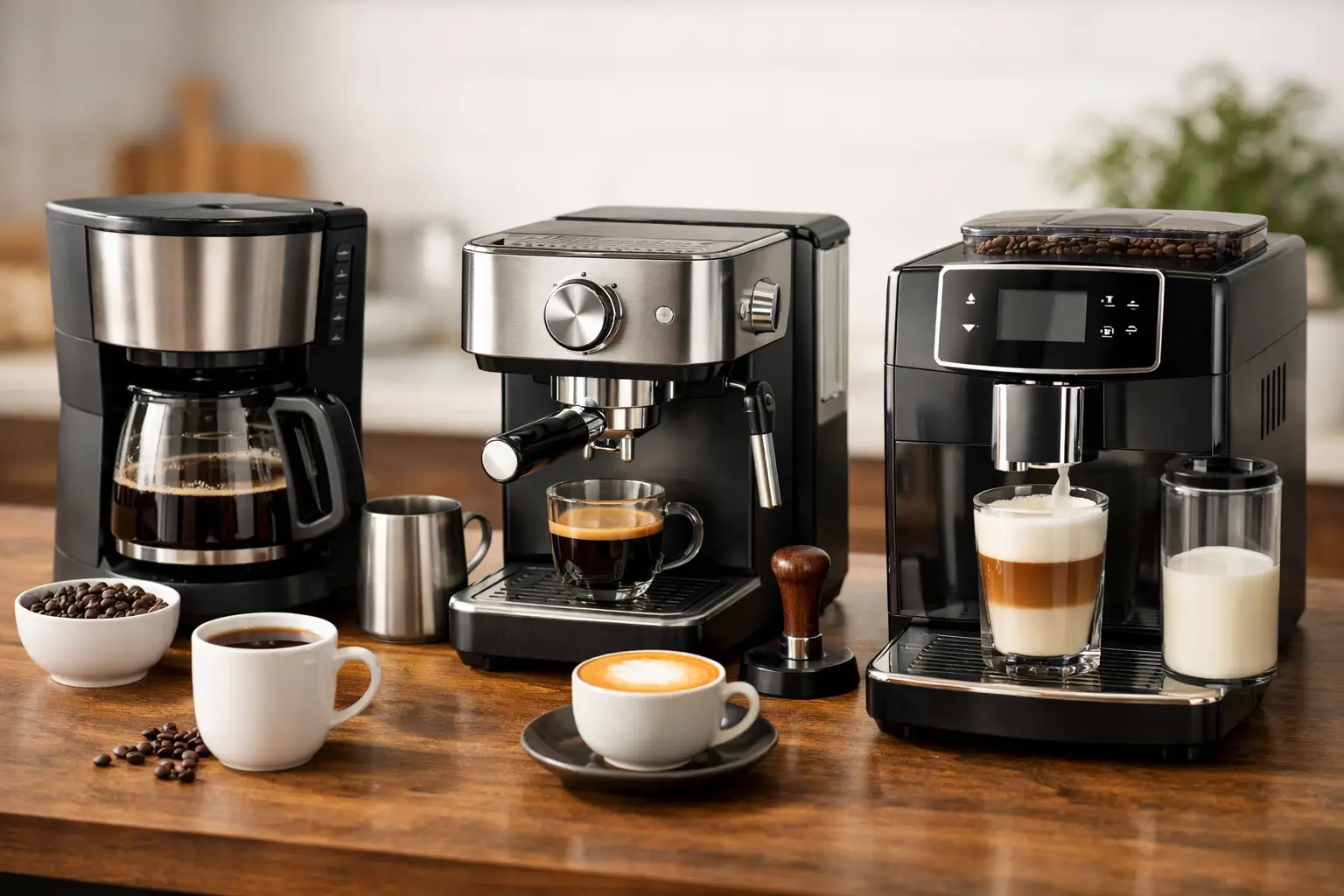
Bean-to-cup machines
Bean-to-cup machines suit buyers who want fresh coffee with minimal effort. They grind beans, brew coffee and often froth milk at the touch of a button. For many households, this is the easiest route to café-style drinks at home.
The main benefit is convenience. You get fresher coffee than most pod machines, with less work than manual espresso. They are a strong choice for busy homes, couples who drink different coffees, or anyone who wants one machine to do everything.
The trade-off is price and size. These machines cost more upfront and take up more room. Cleaning can also be more involved, especially if the milk system is automatic. If you want simple daily use but do not want a large machine, this category may feel like too much.
Manual espresso machines
Manual espresso machines are best for buyers who care about control. They let you choose your beans, grind size, dose and milk texture. Done well, they can produce excellent coffee.
They are less suited to anyone who wants a quick, no-fuss drink. You may also need a separate grinder, which adds cost. If you are only making one or two coffees a day and enjoy the process, this can be a great fit. If you want speed before work, it may become a chore.
Milk drinks are usually better on machines with a proper steam wand, but you will need to learn how to use it. Results improve with practice. That is good for some buyers and frustrating for others.
Pod coffee machines
Pod machines are built for speed and simplicity. They are compact, easy to use and usually cheaper to buy. If your main goal is a quick coffee with little mess, they make sense.
The downside is ongoing cost. Pods are usually more expensive per drink than beans or ground coffee. Drink quality can also be less impressive than a good bean-to-cup or espresso setup. For occasional coffee drinkers, that may not matter. For daily use, it often does.
Pod systems can still work well in small kitchens, offices at home, or for people who want predictable coffee without any setup. Just check pod availability and recycling options before buying.
Filter coffee machines
Filter machines are often overlooked, but they are a practical choice if you drink mugs of black coffee rather than espresso-based drinks. They are usually easy to use, cost less to run and can make several cups at once.
They are not the right choice if you want cappuccinos or strong espresso. But for households where people drink coffee throughout the morning, a good filter machine can be better value and less hassle.
What matters most before you buy
Coffee quality
Good coffee starts with the basics. Stable temperature, enough pressure for espresso machines, and decent grinding all matter more than a long list of programmes. A machine with fewer functions but better core performance is usually the smarter buy.
For bean-to-cup and manual espresso machines, grinder quality makes a real difference. Uneven grinding can lead to weak or bitter coffee. If espresso quality is your priority, do not ignore this.
Milk system
If you make milk-based drinks often, pay close attention here. Automatic milk systems are easier and faster. They suit households that want one-touch cappuccinos. The catch is cleaning. If the system is awkward to rinse, many people stop using it properly.
A steam wand gives better control and often better texture, but it needs more effort. This suits buyers who are happy to practise. If not, automatic milk is the safer option.
Ease of cleaning
This is one of the biggest differences between a machine that gets used every day and one that sits in the corner. Drip trays, brew units, milk tubes and descaling all take time. Some machines make this easy. Others do not.
If you want low maintenance, look for removable parts, clear cleaning prompts and straightforward access to the water tank and grounds container. It sounds basic, but it matters a lot in daily use.
Drink options and custom settings
Some buyers want one good espresso. Others want flat whites, americanos and weaker coffees for different people in the house. Check whether the machine lets you save drink sizes, strength levels or milk amounts.
Do not pay extra for dozens of drink presets if you will only use two. Extra settings are only useful when they save time or improve consistency.
Running costs
Upfront price is only part of the picture. Beans are usually cheaper per cup than pods. Manual machines can be cost-effective, but only if you already own or plan to buy a grinder. Filter machines are often among the cheapest to run.
Also look at water filters, descaling products and any branded cleaning tablets. A machine with expensive maintenance items can cost more than expected over a year.
Best coffee machine for home by buyer type
If you want the easiest all-round option, a bean-to-cup machine is usually the best choice. It suits daily use, makes a range of drinks and keeps effort low.
If you want the best espresso and do not mind learning, a manual espresso machine is the stronger option. It gives more control and often better results, but it takes more time.
If you want the cheapest and simplest route to quick coffee, a pod machine is the obvious pick. It works best for light use, smaller kitchens and buyers who value convenience above all else.
If you mostly drink black coffee in larger mugs, a filter machine may be the better match. It is practical, affordable and often ignored by buyers who assume they need an espresso machine.
Common mistakes when comparing coffee machines
One mistake is buying for occasional weekend use when the machine needs to work on weekday mornings. Convenience matters more than many buyers expect.
Another is focusing too much on bar pressure, app controls or drink names instead of daily usability. A machine that is easier to clean and refill will usually be the better long-term buy.
It is also easy to overbuy. If you only drink americanos, you may not need a full milk system. If you only make two coffees a week, a premium bean-to-cup machine may never feel worth the cost.
Final checks before you decide
Measure your worktop space. Check water tank capacity if several people will use it. Think about noise if you make coffee early. If you are choosing a bean-to-cup model, see whether the bean hopper size suits how often you want to refill it.
Most buyers do best when they match the machine to their habits rather than chasing the highest spec. If you compare coffee machines this way, the shortlist gets much smaller very quickly.
The best coffee machine for home is the one you will enjoy using on an ordinary Tuesday morning. Make your choice around that, and you are far more likely to be happy with it.